

What will you learn from the article?
- What is pre-implementation analysis and why is it important?
- What are the stages of pre-implementation analysis?
- What are the differences in analysis for store migration versus new eCommerce?
- What are the benefits of conducting a pre-implementation analysis?
- What challenges and difficulties can arise during pre-implementation analysis?
What is pre-implementation analysis?
Pre-implementation analysis is the first and crucial element of a project – regardless of whether it concerns migration or building a store from scratch. Based on dozens of implementations we have coordinated, we can say with full conviction that, regardless of the project's scale, analysis is an almost mandatory element.
During implementation work, it is extremely important to understand the goals and expectations for the project. Pre-implementation analysis allows for assessing needs and challenges. Its result is a report that enables planning the project's strategy, schedule, and cost estimate.
In this article, we write about why pre-implementation analysis is so important, what elements it consists of, and how we approach its execution depending on the project's specifics. The purpose of this article is to illustrate the benefits of conducting an analysis for both the implementation agency and, most importantly, for the online store owner.
Pre-implementation analysis – elements
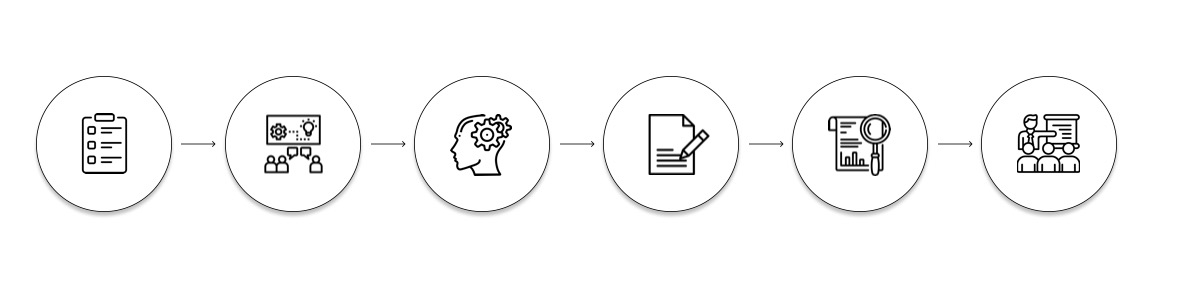
In the context of analysis, proper planning of activities is very important. The entire process is divided into six stages:
Preparing the workshop agenda and sending the plan
The client receives the workshop plan (in which, in many cases, they participate with their internal team) at least one week in advance. It is very important to prepare for the workshop meeting, know what topics will be discussed, and prepare a list of questions. From the Analyst's perspective, all kinds of documents or briefs concerning the project are very helpful – if they exist (and can be provided), they serve as additional sources of knowledge.
Workshops
They are conducted offline or online (depending on preference) and constitute the central part. The workshops discuss all elements related to implementation, including:
- required functional elements of the store on the frontend
- required functional elements of the store on the backend
- required applications
- payment and logistics processes
- required integrations with external systems (including PIM, ERP, CRM)
- data flow
- business goals and assumptions for the store
Based on the information gathered during the workshops, the Analyst proceeds to the third stage. It should be emphasized that the scope of the workshops is always agreed individually, taking into account the client's needs.
Self-analysis
Based on all data from the workshops and compiled notes, the Analyst prepares an analysis report, examines the feasibility of the project assumptions, verifies needs, searches for appropriate solutions, creates an implementation strategy, plan, timeline, and cost estimate. During self-analysis, there may be a need for further meetings to specify particular elements of the project.
Report preparation
Developing a document summarizing the self-analysis, which contains all project information and an action plan, is the next element. The Analyst discusses the report and also allows time for independent review of its results and providing feedback.
Making changes
If, during the verification of the entire implementation plan and report, elements appear that will ultimately require modification, the Analyst examines their feasibility and adjusts the project accordingly.
Report discussion
The final document is discussed with the client once again to summarize all elements.
Pre-implementation analysis – migration vs. new eCommerce
The scope of the analysis varies depending on the project it concerns. It is natural that every analysis looks different, as no two e-commerce projects are the same. However, we can confidently say that pre-implementation analysis for a migration project is approached differently than for building a completely new online store.
In the case of migration, the client already has some background, knows what bothers them in their e-business, what works, and which systems they have implemented. As a rule, they have a certain vision for the project (a vision that the analyst verifies and checks for feasibility). In such a situation, the pre-implementation analysis primarily aims to gather information about the current structure, understand the client's expectations, and plan the implementation in such a way as to both properly migrate all data and deliver the required functionalities. We mentioned the importance of pre-implementation analysis, among other things, in the article dedicated to migrating from Shoper to Shopify.
When the analysis concerns a newly created online store, the client's needs often become clear during the analysis itself – it sometimes happens that the vision for the e-store is defined only during its course. During such workshops, more attention is paid to sketching out functionalities, based, among other things, on benchmarks.
Pre-implementation analysis – benefits
A key benefit of conducting pre-implementation analysis is the in-depth verification of project assumptions and the development of an action plan. It is thanks to the analysis that all kinds of risks and uncertainties that may arise during implementation can be identified – this allows for maximum reduction of project-related risks already in the initial phase. Thanks to the developed implementation plan and its timeline, it is possible to plan work in such a way as to meet the client's time and cost assumptions.
The analyst's role is not only to develop an implementation plan and prepare project specifications but also to address all client concerns at the workshop stage – thanks to in-depth knowledge of the system on which the store is to be built, external tools, and required integrations, the client receives complete information. They also gain knowledge about the resources that will be required on their side for the project to be implemented according to the assumptions.
An undeniable benefit of pre-implementation analysis is also that based on it, a cost estimate is developed, thanks to which the project's budgetary framework is known. It is natural that a project is something variable, and new needs may arise during its course, but a precisely conducted analysis allows for foreseeing many issues and planning implementation costs in such a way as to minimize the risk of a situation where the budget is exceeded.
Thanks to pre-implementation analysis, the client makes an informed decision regarding the chosen technology, solutions, integrations, and applications.
Difficulties in pre-implementation analysis
It is also very important to be aware of a certain dependency, namely pre-implementation analysis and the success of an IT project. During the work, the business analyst examines all components of the project, and here, the sincerity and openness of the other party are extremely important. Budgetary constraints, an unchangeable go-live date (e.g., due to already planned marketing activities), limitations regarding the availability of responsible people on the client's side – these are just some of the important elements that cannot be underestimated and should be openly discussed during analytical work. Lack of access to complete information can result in an inadequately tailored implementation plan, which in the long run may lead to failure to meet the functional and financial assumptions of the project.
Analysis is undoubtedly a very important element that brings a number of benefits to both parties – the client and the implementation agency. If you are considering migration or implementing a new eCommerce, it is worth focusing first on an in-depth verification of all elements, which will allow for a very smooth transition to project implementation.
When choosing an analyst, pay particular attention to their experience and expertise – the right specialist at the analysis stage guarantees you quality, professionalism, and consulting at the highest level.
If you are interested in pre-implementation analysis and want it to be carried out by specialists in Shopify and related systems with over a decade of experience, please contact us.
Summary of key information
- Pre-implementation analysis is a crucial stage of an eCommerce project, which includes assessing needs, challenges, and planning the strategy, schedule, and cost estimate.
- The analysis process is divided into six stages: workshop preparation, conducting workshops, self-analysis, report preparation, implementing changes, report discussion.
- The scope of analysis differs depending on the project – the analysis for store migration looks different than for new eCommerce.
- Benefits of analysis include precise planning, minimizing project risks, defining the budget, and addressing client concerns.
- Analysis allows for predicting many potential problems, which enables better management of implementation costs and schedule.


