

What will you learn from the article?
- What are the main advantages of Vue.js over other frameworks?
- What are the core concepts and syntax of Vue.js?
- How do Vue.js and React compare in terms of performance and state management?
- What social support do both technologies offer?
- What tools and libraries are available for Vue.js and React?
Overview of the main advantages of Vue.js
Vue.js is a JavaScript framework for building user interfaces (UIs) and unidirectional data flow. In this article, we'll focus on the Vue.js vs. React comparison, with a focus on Vue.js first. Below is an overview of Vue.js's key advantages:
→ Reactivity: One of Vue.js's biggest strengths is its responsiveness. It operates on a reactive data approach, meaning that as data changes, the user interface automatically updates.
→ Ease of learning: Vue.js is relatively easy to learn because the framework structure is clear and the documentation is well-written, making it easy to get started.
→ Small size: Vue.js is relatively small in size, which translates into fast page loading. This is important for the effectiveness of a website / eCommerce (within eCommerce our Shopify agency provides a number of services), especially on mobile devices.
→ One-way data flow: Vue.js uses unidirectional data flow, which means data only moves in one direction, making it easier to debug and maintain your code.
→ Modularity: Vue.js is highly modular. It consists of functions that can be used as needed, making it easy to create complex interfaces.
→ Components: Vue.js is structured around components that can be reused in different places. This facilitates code reuse and increases design clarity.
→ Community support: Vue.js has gained a lot of community support, which means there are many resources such as libraries and tools available to make working with this framework easier.
→ Integration: Vue.js integrates easily with other technologies and libraries and can be used with tools like Vuex (for state management) and Vue Router (for routing).
→ Progressive approach: Vue.js takes a progressive approach, meaning you can gradually implement it into existing projects. You don't have to rewrite all your code at once.
→ Active development: Vue.js is actively developed, and its community is committed to improving and evolving the framework. This means the framework will continue to adapt to new needs and trends in the world of front-end development.
Introducing the basic concepts and syntax of Vue.js
Here's a quick tour of the basic concepts and syntax of Vue.js:
1. Installing Vue.js:
To get started with Vue.js, you first need to join the project. You can use a CDN to download the library or use tools like the Vue CLI.

or

2. Basic example:
Below is a simple HTML example using Vue.js.
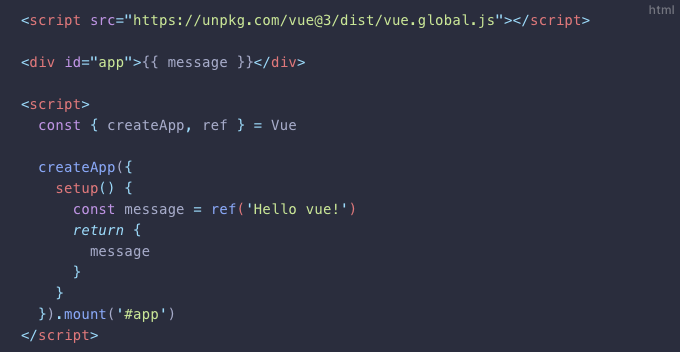
In this example {{ message }} is an example of a Vue directive that binds to data in a Vue instance.
3. Vue Directives:
Directives are special attributes prefixed with v- that tell Vue.js what to do. Examples include v-if, v-for, and v-bind.
4. Vue Components:
Vue.js is based on reusable components. Components have their own data, methods, and template structure.
5. Interactions and Methods:
In Vue.js you can define methods and handle events.
6. Bidirectional data binding:
Vue.js allows you to easily create bidirectional data binding using v-model.

This is just a quick overview of the basic concepts and syntax of Vue.js. The framework offers many more features and capabilities that you can explore as you work on more advanced projects.
The main advantages and benefits of using React
React is a JavaScript library created by Facebook for building user interfaces. Here are the main advantages and benefits of using React:
1. Reactivity and Virtual HOME:
- Reactivity: React uses a reactive approach, which means that when data changes, the UI is automatically updated.
- Virtual HOUSE: React uses a virtual DOM, which allows for efficient change management and minimizes manipulation of the real DOM, which speeds up rendering.
2. Components:
- React is based on components, which are independent, hermetic UI elements.
- Components are easy to understand, reuse, and maintain, which contributes to code modularity.
3. One-way data flow:
- React promotes unidirectional data flow, making it easier to track and understand how data moves through your application.
4. JSX (JavaScript XML):
- JSX allows you to write user interface structures in an HTML-like syntax, which makes your code easier to read and concise.
5. Cooperation with other technologies:
- React can be easily integrated with other technologies and libraries.
- It is often used in conjunction with tools like Redux to manage application state.
6. Large community and ecosystem:
- React enjoys a large development community, which means there are many resources, guides, and support libraries available.
- A large ecosystem of tools supports the development of React-based applications.
7. Developer Tools:
- React offers extensive developer tools that make it easy to debug, profile, and monitor your application.
8. Speed and efficiency:
- Thanks to the virtual DOM and an efficient rendering strategy, React is fast and efficient, which is especially important in large projects.
9. Facebook Support:
- React is maintained by Facebook, which means that the framework is actively developed and adapted to the needs of modern projects.
10. Universality (React Native):
- React Native, based on React, allows you to create native mobile apps for different platforms, so you can share code between iOS and Android apps.
For these reasons, React is widely used in the industry and is considered one of the most popular libraries for building user interfaces. However, the choice between Vue.js and React depends on the specifics of the project and the preferences of the development team.
Overview of how to work with React
Working with React involves creating interactive user interfaces by building components, managing application state, and responding to events. Here's a high-level overview of how to work with React:
1. Creating Components:
- React relies on components, which are independent, reusable pieces of the user interface.
- Components can be class-based (ES6 classes) or function-based (using Hooks for functions).
2. JSX (JavaScript XML):
- JSX is an HTML-like syntax used in React to describe the structure of components.
- JSX is transpiled into calls to the React.createElement() function.

3. State and Props:
- A state is an object that stores data specific to a component.
- Properties (props) are data passed from parent to child.
4. State Management:
- React offers methods like setState to update the state of a component.
- State updates lead to re-rendering of the component.
5. Events:
- Event handling in React is done using special attributes such as onClick.
- Events are handled by component methods.
6. Component Life Cycle:
- Components in React go through different lifecycle phases, such as componentDidMount, componentDidUpdate, and componentWillUnmount.
- This allows you to perform operations at different stages of a component's life.
7. Routing:
- React Router is a popular routing library for React applications.
- Allows you to dynamically change views without refreshing the page.
8. Redux (State Management):
- Redux is an application state management tool, especially used in larger React projects.
- It facilitates the management of application state in a unidirectional manner.
9. Testing:
- React is test-friendly. Popular testing tools include Jest and Enzyme.
- Unit, integration and end-to-end testing are easy to achieve.
10. Performance and Optimization:
- React offers various optimization techniques such as shouldComponentUpdate and PureComponent to ensure high application performance.
Working with React requires an understanding of these core concepts and the ability to use the tools and libraries in the React ecosystem. It's also worth keeping up with documentation and community updates, as React and its ecosystem are actively developing.
Comparing Vue.js and React
1. Vue.js vs React Performance and Rendering Efficiency
Rendering performance in Vue.js and React is generally good, but the two frameworks have some differences in their approach. Here's a comparison of performance and rendering in Vue.js and React:
Vue.js:
-
Reactivity and Virtual HOME:
- Vue.js uses reactivity and a virtual DOM to efficiently track data changes and minimize actual DOM operations.
-
Reactive Objects and Change Detection:
- Vue.js uses reactive objects, thanks to which the framework is able to monitor changes in data and automatically update the user interface.
-
Rendering Strategies:
- Vue.js offers various rendering strategies, including v-once, which renders an element only once, which can be useful in static components.
-
Template Compilation in Browser:
- Vue.js has the ability to compile templates in the browser, which can improve performance when launching the application.
React:
-
Virtual HOUSE:
- React uses a virtual DOM, which allows for efficient change management and reduced manipulation of the real DOM.
-
Reconciliation:
- The reconciliation mechanism in React analyzes the differences between the current and previous state of the UI and minimizes the number of operations on the real DOM.
-
Pure Functions and Pure Components:
- Using Pure Functions and Pure Components in React can help with optimization because they avoid unnecessary rendering.
-
Improved Fiber Reconciliation:
- React Fiber is a new internal architecture that introduces improvements to reconciliation, which improves performance and allows rendering to be interrupted mid-stream to handle priorities.
-
Optimizations and Speed Up Methods:
- React offers various optimizations such as React.memo and React.lazy that help optimize component rendering and loading.
Both Vue.js and React are efficient and offer good rendering optimization tools. The choice between them often depends on the developer's preferences, the project team, and the specifics of the project. In practice, both frameworks are widely used in the industry and are used to build effective user interfaces. It's worth noting that performance also typically depends on how the developer designs and implements components and manages application state.
2. How to manage application state VueX for Vue.js and Redux for React
Managing application state is a key element in developing scalable and complex front-end applications. In Vue.js, we use the Vuex library for state management, while React uses Redux. Here's how state management works in both contexts:
Vue.js + Vuex:
1. Vuex Installation:
- First, you need to install Vuex in your Vue.js project.

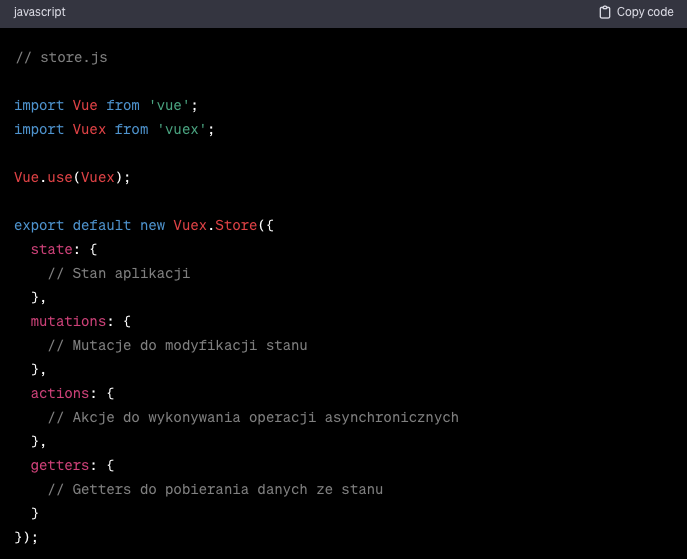
2. Creating a Store:
- Vuex is based on the concept of a unified data store called a “store”.
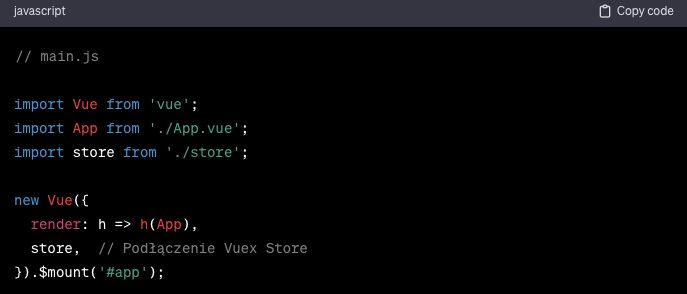
3. Connecting Store to Application:
- Connect the store to the root of your Vue application.
4. Using State in Components:
- Components access data from Vuex through mapState, mapGetters, mapMutations, and mapActions.
React + Redux:
1. Redux installation:
- Install Redux in your React project.

2. Creating a Store:
- In Redux, we also create a unified data store that stores the state of the entire application.
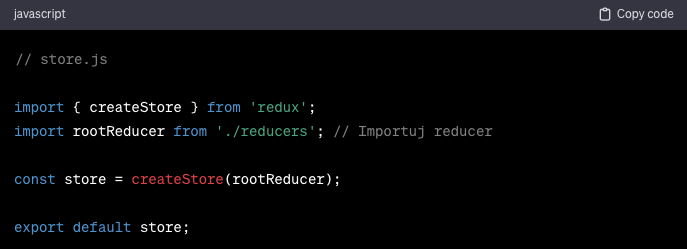
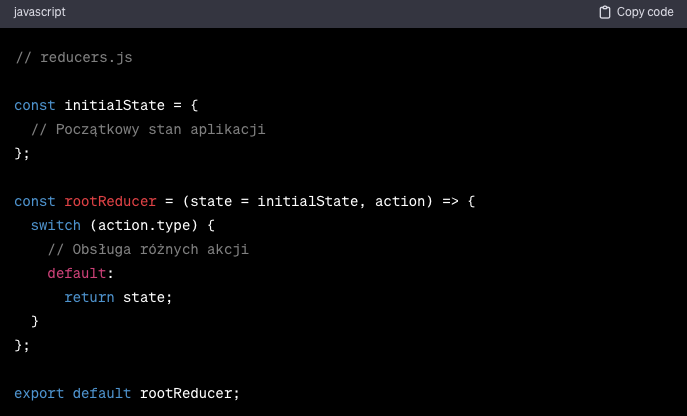
3. Root Reducer:
- Reducer is a function that handles actions and returns a new state.
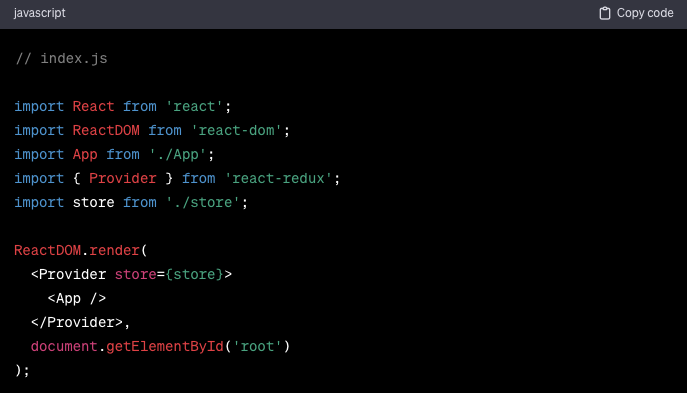
4. Connecting Store to Application:
- Connect the store to your app using Provider from react-redux.
5. Using State in Components:
- Components access data from Redux using the connect function.
State management in Vue.js using Vuex and React using Redux follow similar patterns. Both solutions enable uniform data storage, state access across components, and action handling, but they differ in syntax and structure. The choice between them often depends on the team's experience, programming preferences, and the specifics of the project. In both cases, it's crucial to understand the concept of uniform state and its management within the context of the respective framework.
3. Community and Developer Support
Community and developer support are crucial for any framework or library, as they influence the availability of resources, tools, solutions, and the evolution of the technology itself. Here's a comparison of the community and developer support for Vue.js and React:
Vue.js:
1. Community:
- Vue.js has an active and growing developer community.
2. Support and Resources:
- Even though the Vue.js community is smaller than React, the framework has a good amount of resources such as documentation, tutorials, discussion forums, and educational resources in the form of online courses and conferences.
3. Ease of Communication:
- Due to the smaller community, communication and getting help can be easier, and answers to developer questions can be quickly available.
React:
1. Community:
- React has one of the largest developer communities in the world.
- A large number of users and an active community mean a rich base of knowledge and resources.
2. Support and Resources:
- React enjoys support from Facebook, which translates into professional documentation, tools, and continuous improvements to the framework.
- A wide range of resources, including official developer tools and community tools like Stack Overflow.
3. Vast Educational Resources:
- React has a wide selection of online courses, tutorials, and educational materials, making it easy for beginners to learn and for advanced developers to develop their skills.
4. Flexibility and Project Variety:
- The large community means React is widely used across a variety of project types, from small websites to large enterprise applications.
Both communities (when considering Vue.js vs. React) are active, and the choice between them often depends on preference, project scale, and the development team's experience. For smaller projects or those just starting out with the framework, the Vue.js community may be more accessible. For large projects or enterprise applications requiring advanced tools and frameworks, React may be more appealing due to its large community and support from Facebook.
4. Ecosystem of tools and libraries available for both frameworks
The ecosystem of tools and libraries available in the Vue.js vs. React comparison includes a wide range of extensions, tools, and libraries that help build, test, deploy, and maintain front-end applications. Below is a comparison of the ecosystems of both frameworks:
Vue.js:
1. Vue Router:
- The official routing library for Vue.js applications. It enables in-app navigation and dynamic component loading.
2. Vuex:
- The official library for managing state in Vue.js applications. It is especially useful in larger projects where state management becomes more complex.
3. Vue CLI:
- The official tool for quickly and easily getting started with your Vue.js project. It offers out-of-the-box configuration, automatic refresh, and more.
4. Vuetify, Element UI, Ant Design Vue:
- Popular UI component libraries that offer ready-to-use components in Material Design, Element UI, and Ant Design styles.
5. Nuxt.js:
- A universal application framework (server-side rendering) based on Vue.js. It makes it easy to create SSR applications with ready-made configuration.
6. Vue Test Utils:
- Vue.js component testing tools. Allows you to write unit and functional tests.
7. Quasar Framework:
- A framework for building mobile, web, and desktop applications using Vue.js. It provides ready-made components, tools, and configuration options.
React:
1. React Router:
- A routing library for React apps. It allows navigation between different views of the app.
2. Redux:
- A popular React application state management library that helps maintain consistent state across your entire application.
3. Create React App:
- A tool that allows you to quickly get started with a new React project. It includes a ready-made configuration and simplifies the build process.
4. Material-UI, Ant Design, React Bootstrap:
- Popular UI component libraries for React that provide ready-made components in Material Design, Ant Design, and Bootstrap styles.
5. Next.js:
- A universal app framework (server-side rendering) based on React. It enables server-side page rendering.
6. Jest, Enzyme, Testing Library:
- Tools for testing components and logic in React applications. This is a comprehensive suite for various types of testing.
7. React Native:
- A framework for building native mobile apps using React. It allows code sharing between iOS and Android apps.
Both ecosystems are rich in tools and libraries that make working with these frameworks easier. The final choice depends on the specific project requirements, the development team's preferences, and the specifics of the application. Both Vue.js and React have strong communities and offer solutions for various aspects of front-end application development.
5. Clarity and readability of the code
Code clarity and readability are crucial aspects of application development, as they influence code understanding, maintenance, and evolution. Both Vue.js and React focus on a declarative approach, which aims to make the application structure easier to understand. Below is a comparison of code clarity and readability between Vue.js and React:
Vue.js:
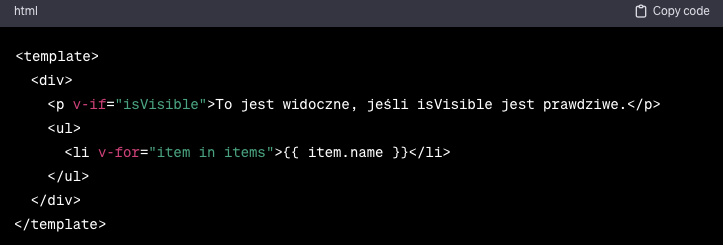
1. Syntax and Directives:
- Vue.js syntax is considered more concise and readable, especially for people accustomed to HTML and JavaScript.
- Directives like v-if, v-for are declarative and make it easier to understand what is happening in the code.
2. Components:
- Components in Vue.js are more self-contained and focus on a single task, making the code easier to understand and maintain.
React:
1. JSX and Components:
- JSX in React, while it may seem unusual at first, becomes readable to most developers after a short time.
- Components in React are also modular and single-task oriented, making it easier to understand the application structure.

2. One-way Data Flow:
- React uses unidirectional data flow, which means that data passing between components is more visible and predictable.
Both Vue.js and React place a strong emphasis on code readability through a declarative approach, component modularity, and unidirectional data flow. The choice between them from a code readability perspective typically depends on individual developer preferences and experience. Ultimately, both frameworks aim to make code easier to understand and maintain throughout application development.
Application examples
Vue.js is used in a variety of project types, from simple websites to more advanced web applications. Below are some examples of how Vue.js can be used:
-
Websites:
- Vue.js is great for creating simple, interactive websites where dynamic UI updates are key.
-
Single Page Applications (SPA):
- Vue.js is often used to build Single Page Applications (SPAs), where the entire application runs in a single container on the page, without the need for page reloads.
-
Interactive Forms:
- Thanks to Vue.js reactivity, it is easy to manage and update interactive forms in real time.
-
Widget Components on the Website:
- Vue.js is often used to create small, encapsulated components that can be embedded anywhere on a page.
-
Administration Panel:
- Applications for content management, administration panels or dashboards, where dynamic user interfaces are important.
-
Remote Applications:
- When combined with dynamic component loading tools, Vue.js can be used to create applications that allow modules to be dynamically loaded on demand.
-
Mobile Applications:
- Using Cordova or Capacitor, Vue.js can be used to create hybrid mobile apps that can be installed on mobile devices.
-
E-Commerce Sites:
- Vue.js is great for creating interactive shopping carts, product filters, and other interface elements for e-commerce sites.
-
Real-Time Applications:
- Thanks to its reactivity, Vue.js is used to create applications that require real-time updates, such as online chat or notification systems.
-
Online Games:
- When combined with game development tools and libraries, Vue.js can be used to create simple web games.
-
Text Editors and Data Visualization:
- Vue.js is used to create interactive text editors and data visualizations where dynamic content manipulation is key.
-
Educational Applications:
- Due to its ease of learning and understanding for beginners, Vue.js is used in educational projects such as e-learning platforms and learning applications.
React is widely used in the industry and is used in various types of projects:
Single Page Applications (SPA):
- React is often used to build Single Page Applications (SPAs), where the entire application runs in a single container on the page, without the need for page reloading.
-
Mobile Applications:
- React Native is a React-based framework that allows you to create native mobile apps for iOS and Android by sharing code between them.
-
Websites:
- React is great for creating dynamic and interactive websites, especially where user interface components need to be updated frequently.
-
Administration Panel:
- Content management applications, administration panels or dashboards, where dynamic user interfaces are key.
-
Online Games:
- With the help of game libraries like React Three Fiber, React can be used to create simple web games.
-
Real-Time Applications:
- React is often used to build applications that require real-time updates, such as online chat or notification systems.
-
E-Commerce Sites:
- React is used in e-commerce projects to create interactive shopping carts, product filters, and other interface elements.
-
Remote Applications:
- When combined with dynamic component loading tools, React can be used to create applications that allow modules to be dynamically loaded on demand.
-
Text Editors and Data Visualization:
- React is used to create interactive text editors and data visualizations where dynamic content manipulation is key.
-
Educational Applications:
- Thanks to the simplicity and readability of the code, React is used in educational projects such as e-learning platforms and learning applications.
-
Photo and Video Viewing Tools:
- React can be used to create interactive photo and video viewing tools where dynamic switching between media is required.
-
Banking and Finance Applications:
- In the financial sector, React is used to build banking application interfaces, financial management systems, and trading platforms.
It is worth mentioning that regardless of which framework is used in a given project, one of the key aspects before publication is software testing .
Trends 2023
The key aspects of the Vue.js vs React comparison in 2023 include:
React:
-
Server-Side Rendering (SSR) and Hydration:
- Continued growth in server-side rendering (SSR) in React. Integration with Next.js and hydration strategies for better application performance.
-
Advanced Developer Tools:
- Further development of developer tools, including debugging, profiling, and performance analysis tools, to make it easier to build and optimize React apps.
-
Enhanced Typing Integration:
- Increased use of TypeScript in React projects for greater type certainty and easier management of large applications.
-
Status Management Tools:
- A continued evolution of the state management approach, leveraging both React tools like the Context API and external solutions like Redux.
Vue.js:
-
Vue 3 and Vue 2 Seamless Transition:
- Continued adoption of Vue 3 for its new features and performance. Community support in migrating existing applications from Vue 2 to Vue 3.
-
Composition API:
- A deeper understanding and use of the Composition API in Vue.js. A more flexible approach to component creation, which could become standard in new projects.
-
Vue Router and State Management in the Vue Ecosystem:
- Development of tools and libraries around Vue Router and Vuex (for state management) to make managing routing and application state easier and more efficient.
-
Experiments with Vue 3 Ecosystem:
- Exploring new uses for Vue 3 in various areas, such as mobile apps using Vue Native or experimenting with new rendering tools.
Main differences Vue.js vs React
Vue.js and React are two popular JavaScript frameworks for building user interfaces, but they differ in several ways. Here are the main differences between Vue.js and React:
1. Syntax:
-
Vue.js:
- It uses HTML-based syntax, which makes it more readable and understandable for people who are already familiar with HTML and CSS.
- It uses directives such as v-if, v-for, which are inserted directly into the HTML code.
-
React:
- It uses JSX (JavaScript XML), which allows you to write components in an HTML-like syntax, but with the addition of JavaScript logic.
- It may be more difficult for people new to JavaScript, especially those who are not used to JSX.
2. Component System:
-
Vue.js:
- Components in Vue.js are more self-contained, meaning they have their own data scope, methods, and style, making component isolation easier.
-
React:
- Components in React also have their own states, but managing them may require the use of additional tools such as Redux.
3. Reactivity:
-
Vue.js:
- It's based on a reactive approach to data. As data changes, Vue automatically updates the view.
-
React:
- It uses one-way data binding and component updates through state or property changes (props).
4. Tools and Conventions:
-
Vue.js:
- It includes an official CLI (Command Line Interface) tool called Vue CLI, which makes project initialization, building, and testing easier.
-
React:
- By default, it uses tools like Create React App, which offer similar features to the Vue CLI.
5. Size and Performance:
-
Vue.js:
- Vue.js is often considered more lightweight and easier to learn than React. It's great for smaller projects.
-
React:
- It is more extensive and may be more suitable for larger projects with more complex logic and state.
6. Community and Ecosystem:
-
Vue.js:
- It has an active community, but it's smaller than the React community. However, it's constantly growing.
-
React:
- It's one of the most popular JavaScript frameworks and has a huge community. It also has a large ecosystem of tools and libraries.
7. Integration with Other Technologies:
-
Vue.js:
- It easily integrates with other projects and technologies, including existing jQuery-based projects.
-
React:
- It has widespread use in the JavaScript ecosystem and is often chosen for integration with large projects.
Choosing a framework for specific applications
The choice between Vue.js and React depends on various factors, such as project size, team experience, programming preferences, and project specifics. Here are some guidelines for choosing a framework based on specific use cases:
Choosing Vue.js:
-
Small and Medium Projects:
- Vue.js is often considered more beginner-friendly and easier to learn, making it a great choice for smaller and medium-sized projects.
-
Rapid Prototyping:
- If you need to prototype quickly or create an MVP (Minimum Viable Product), Vue.js may be more effective due to its simplicity and readable syntax.
-
Projects with Integration with Existing Applications:
- If you are working on a project that needs to integrate with existing jQuery-based websites, Vue.js may be more compatible.
-
Ease and Speed of Learning:
- If you want a lightweight framework and quick learning curve, Vue.js offers a less complex structure and is more beginner-friendly.
React selection:
-
Large and Complex Applications:
- React is often chosen for larger projects and applications with complex logic, where more extensive tools and frameworks are more appropriate.
-
Common Code Base for Mobile Platforms:
- If you plan to build apps for multiple platforms (web, iOS, Android), React Native (based on React) provides a unified code base for mobile apps.
-
Large Community and Ecosystem:
- If you want a large ecosystem of tools, libraries, and extensions, as well as a large developer community, React is one of the most popular frameworks.
-
Working in Teams:
- In larger teams where different developers might be working on different parts of the application, the unidirectional data flow in React can make state management and predictability easier.
Other Factors:
-
Efficiency:
- If performance is key, both frameworks offer good performance, but differences may depend on the specific implementation and optimization.
-
Ecosystem Development:
- The development of tools, libraries, and frameworks depends on the project's needs. React has a wide range of tools, and Vue.js is also evolving rapidly.
-
Personal Preferences:
- The final choice may depend on the personal preferences of the developers and the experience of the team.
Summary
Vue.js
- Responsiveness : Automatically updates the user interface in response to data changes.
- Ease of learning : Simple structure and well-written documentation make it easy to get started.
- Small size : Fast page loading, which is crucial for performance.
- Unidirectional data flow : Makes code easier to debug and maintain.
- Modularity : Ability to use only the functions you need.
- Components : Reusing components increases design clarity.
- Community Support : Extensive community with many resources.
- Integration : Easy connection with other technologies like Vuex and Vue Router.
- Progressive approach : Possibility of gradual implementation into existing projects.
- Active development : Regular updates and adaptations to developer needs.
React
- Reactivity and Virtual DOM : Efficiently manage user interface changes.
- Components : Modularity thanks to independent, reusable UI elements.
- One-way data flow : Makes it easier to understand and track data within the application.
- JSX : HTML-like syntax for easier code readability.
- Integration : Easy connection to other libraries like Redux for state management.
- Large community and ecosystem : A broad base of knowledge, educational resources and tools.
- Developer Tools : Extensive debugging and profiling tools.
- Speed and Performance : Improved performance with virtual DOM and rendering strategies.
- Facebook Support : Active development and updates, adapted to modern needs.
- Versatility (React Native) : Ability to create native mobile apps using the same code.
When comparing Vue.js vs. React, both Vue.js and React are strong frameworks, but the choice depends on the specific project requirements and team preferences. It's worth considering the project's complexity, team experience, ease of learning, and the existing ecosystem and tools that will be most useful in a given context.


